Where Hybridity fits
However you come to compliance, by a regulation you need to prove, or a role you need to make lighter, Hybridity works the same way underneath: your own rules become running, provable work.
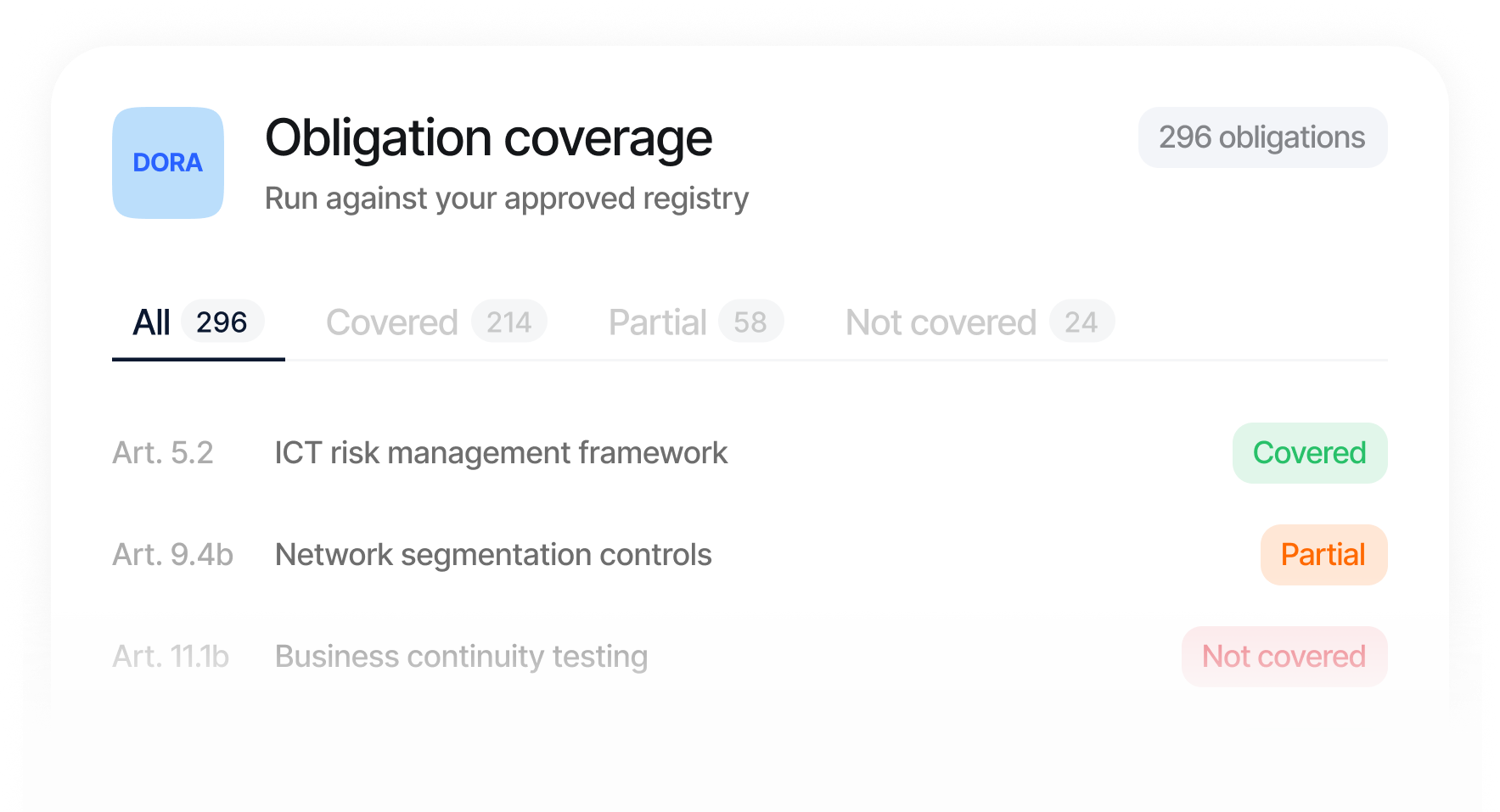
Prove DORA compliance against your own policies.
Hybridity decomposes DORA into a structured obligation register, then runs it against your approved requirements to show exactly where you're covered, partial, or exposed. No mapping by hand, no consultant's binder.
296-obligation coverage map against your existing controls, in days
Every control traces to the DORA article and your own policy clause
Proven on real policy decompositions: hundreds of requirements, dozens of controls
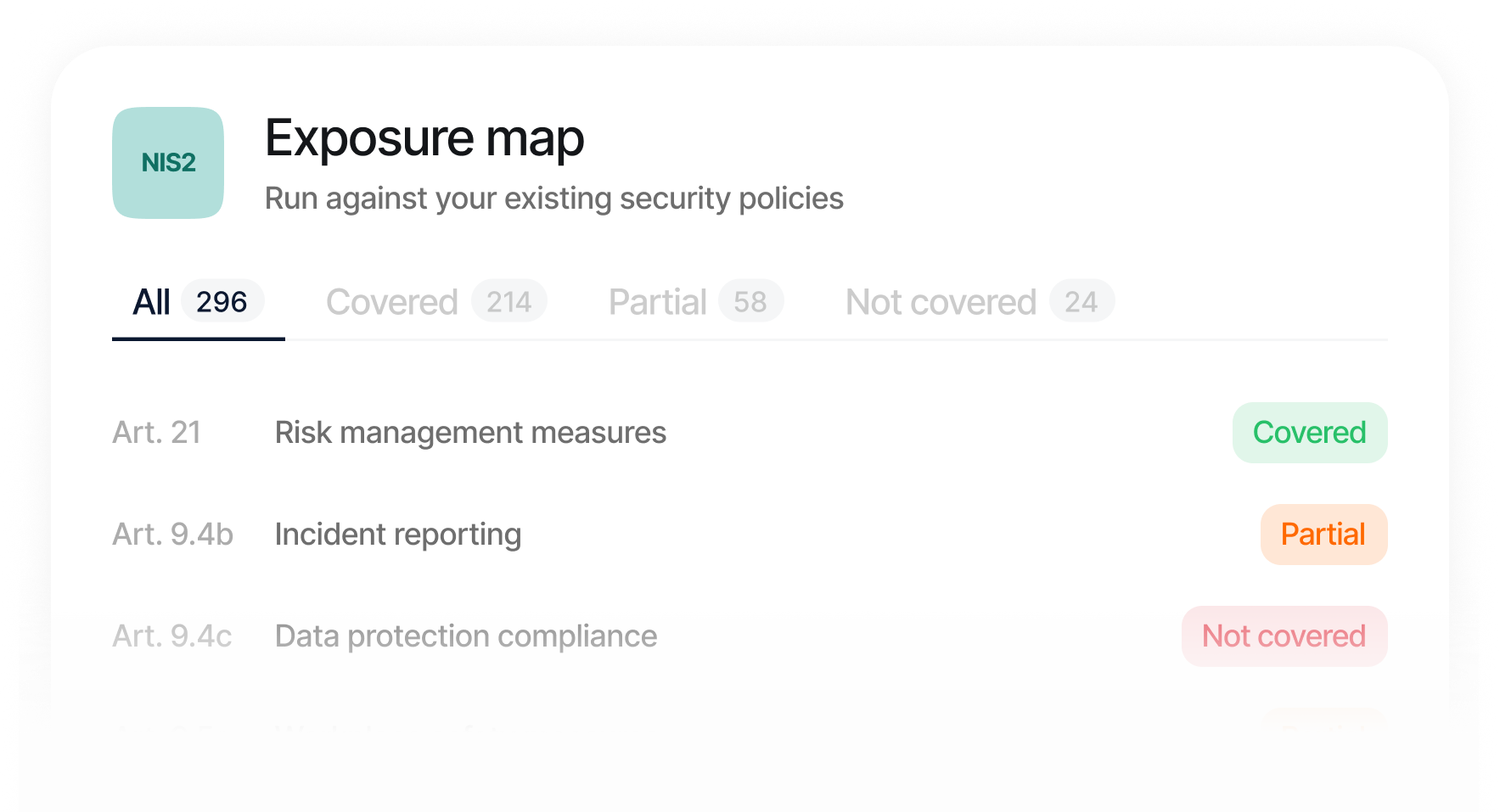
Find out where NIS 2 actually hits you.
NIS 2 is new, and the hardest part isn't the work, it's knowing how much of it applies to you. Hybridity runs the full obligation register against your existing security policies and hands you a provision-level map of your real exposure, before you commit a budget to fixing the wrong things.
Covered / partial / not covered against every NIS 2 article
A scoping tool first — see your gap before you plan the remediation
Built from your own policies, so the map reflects you, not a template
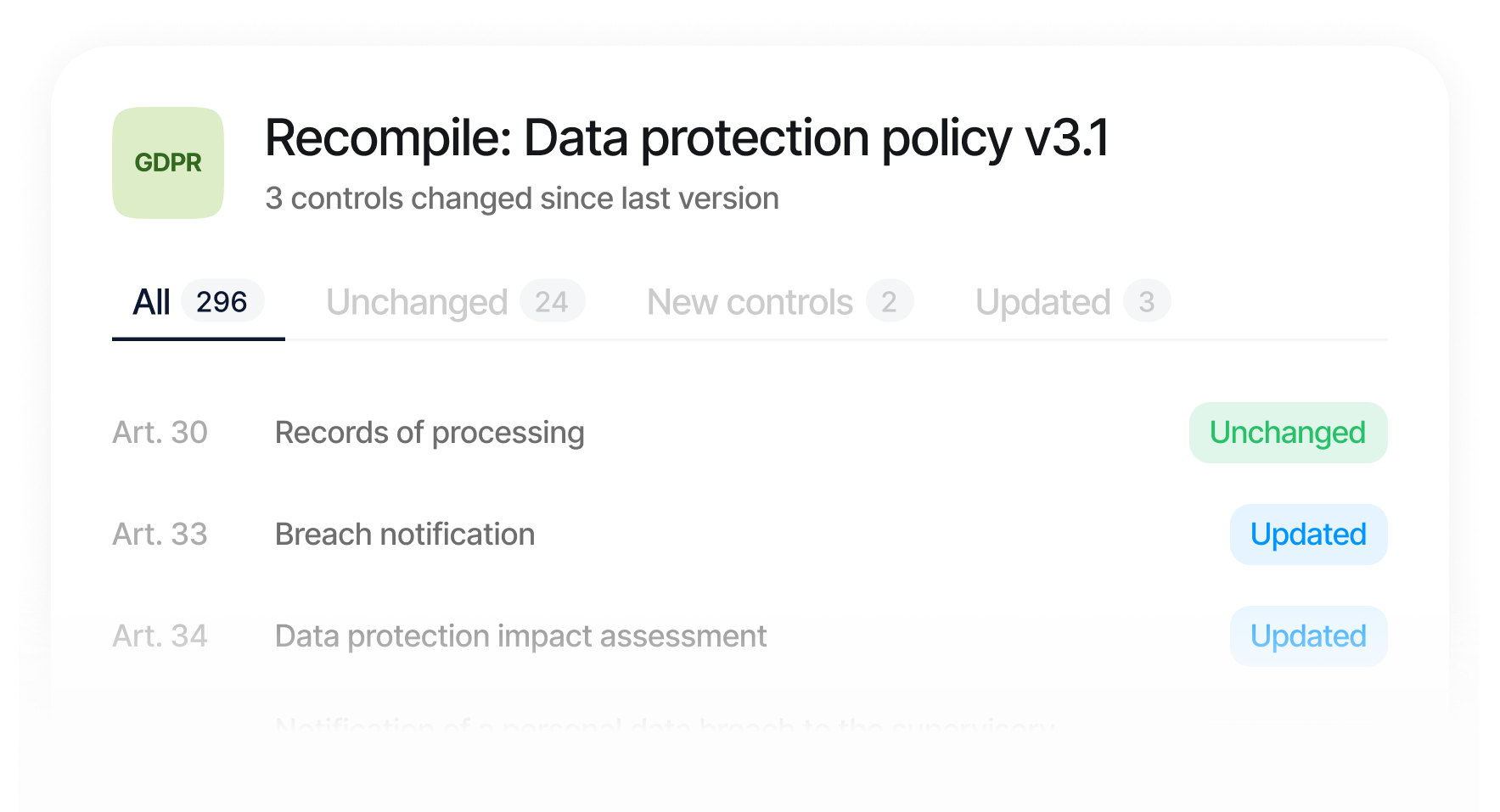
Keep GDPR compliance alive as the guidance moves.
GDPR isn't a one-time project. The regulation is stable, but the guidance and your own systems keep shifting. Hybridity keeps your data-protection controls tied to their clauses, so when something changes you recompile and see exactly which controls moved, instead of re-auditing from scratch.
Obligation-level coverage across the articles that apply to you
Recompile on change — the diff shows precisely what shifted
Every data-protection control traces to its clause and its evidence
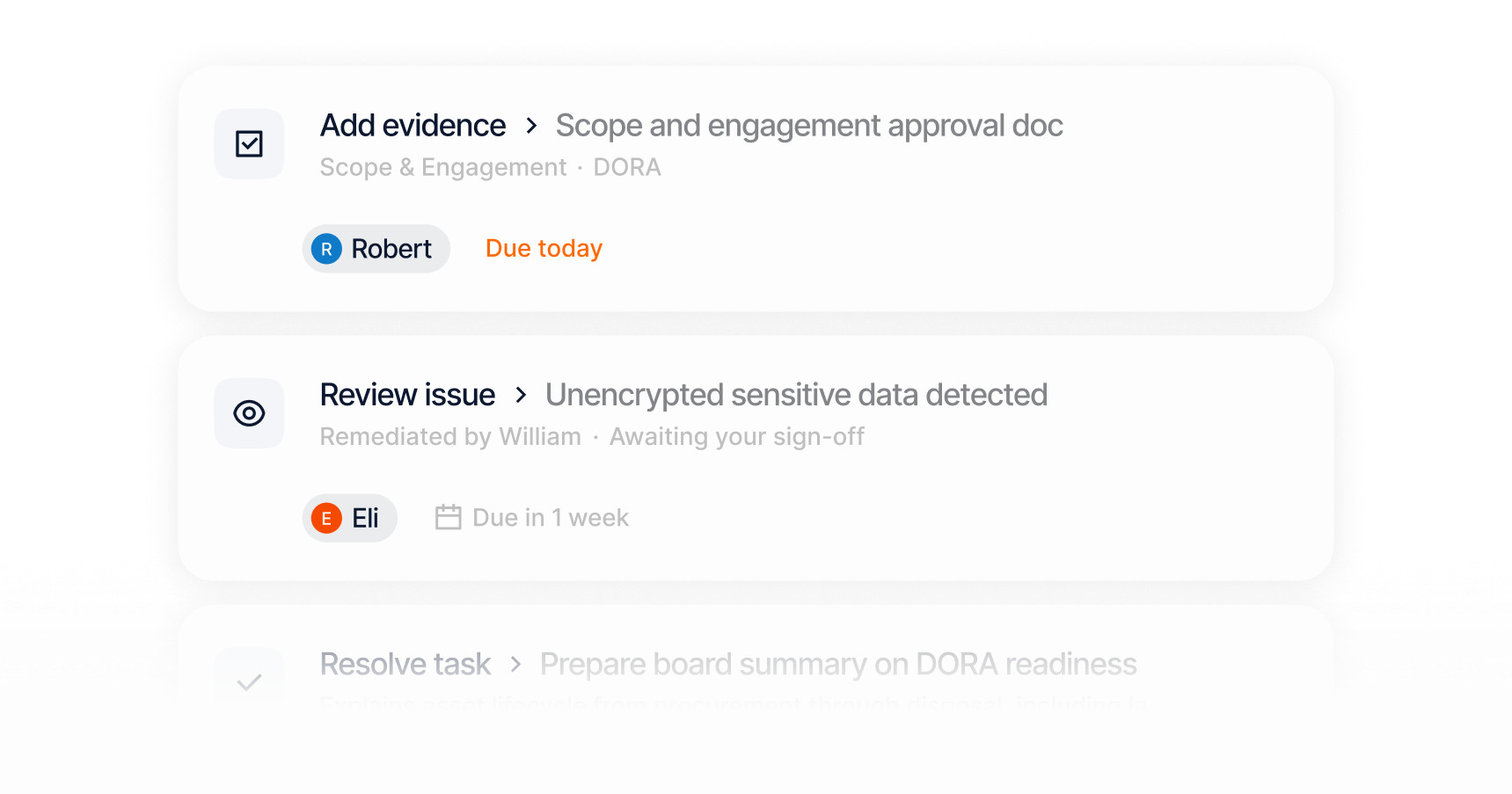
Spend your expertise where it actually matters.
Most of a compliance officer's day goes to chasing evidence, first-pass triage, and reconstructing trails for auditors — not the judgment only you can bring. Hybridity takes the routine off your plate so your time goes to the calls that genuinely need a specialist.
Guided work lets any owner run a control correctly, so you're not the only one who can
AI pre-screens every submission, so you review decisions instead of doing triage
Answer an auditor with a link, and get your reconstruction days back
Give your compliance team room to do their best work.
Your specialists are spending too much of their time on manual, repeatable work. Hybridity turns the policy estate into a running programme — owned, on cadence, evidenced — so the team's hours shift from routine execution to the high-judgment work you hired them for, and you get a live view of where things stand.
A live view of coverage and status across every framework that applies
Hours move from routine execution to judgment and oversight
Resilience by design — the programme keeps running as people come and go
The shared difference
Whatever brought you here, the difference is the same.
Scoping
Weeks of specialist reading to work out which obligations apply and how.
Any regulation decomposed into a structured register, ready to run against your policies immediately.
Coverage
A consultant delivers a static gap report. Accurate the day it lands, stale soon after.
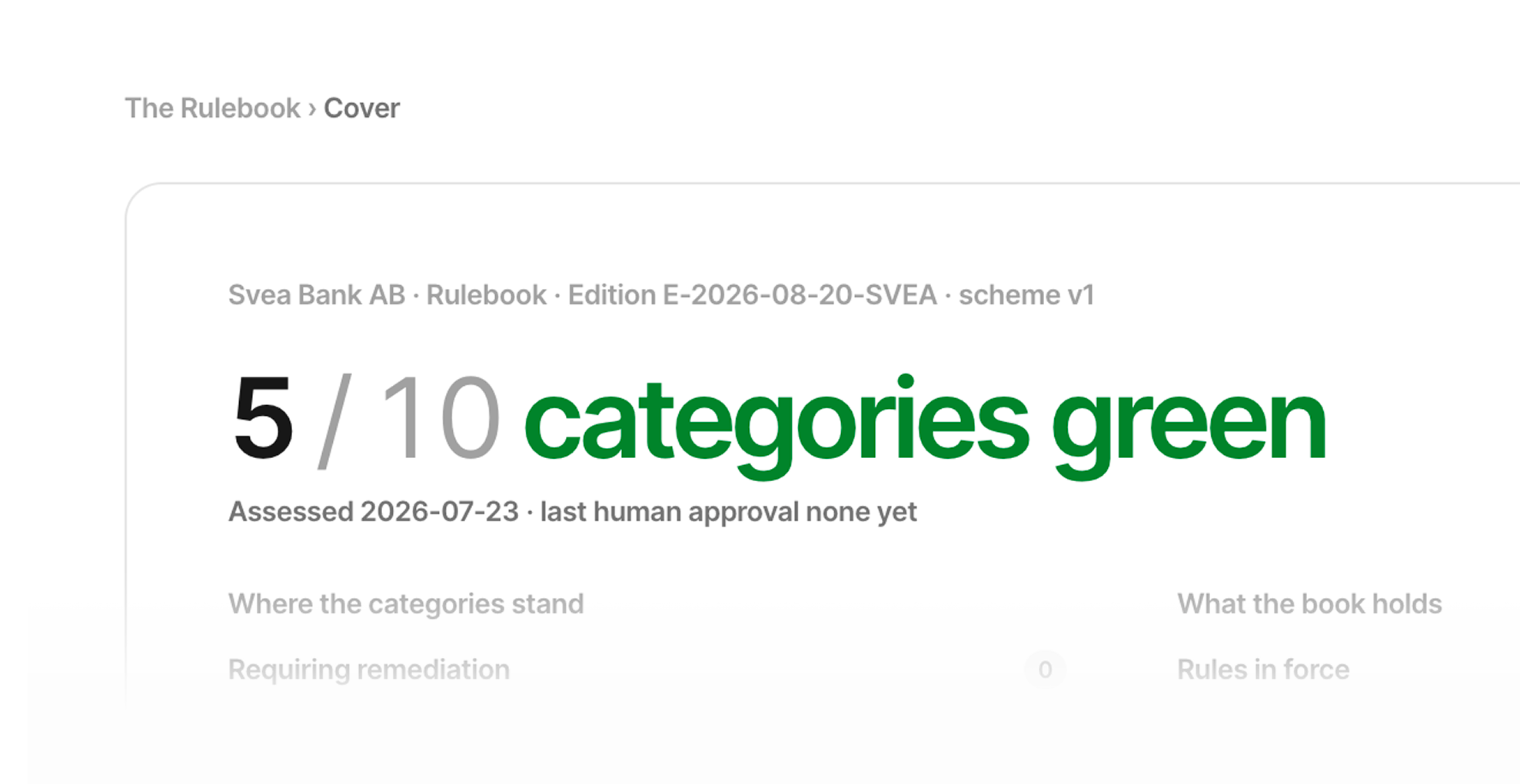
A live coverage map, Covered / Partial / Not covered, updated as your controls change.
Traceability
The link between a control and the rule it satisfies lives in one person's head.
Every control traces to the obligation and the clause in your own policy, in one click.
Evidence
Gathered by email, eyeballed for adequacy, filed somewhere before the audit.
Attached to the task, AI-checked against acceptance criteria, linked to what it proves.
Change
A regulatory update or policy change means re-auditing from scratch.
Recompile. The diff shows exactly what moved, nothing else.
Audit
"Show me you do this, and where it's required" is a half-day reconstruction.
The full chain, task to clause, is a single link.



Security we can prove, not just promise
At Hybridity, security, privacy, and reliability are fundamental to how we build and operate our AI solutions.
Common questions
No. Your controls are built from your own approved policies. A regulation is run against them as a check, producing a coverage map. Where a genuine gap exists, Hybridity can draft the missing control from the regulation, but that's the exception, not the default.
The first map usually starts from one policy estate and one framework. Once the source documents are in, Hybridity structures the obligations, compares them to your approved requirements, and returns a reviewable coverage map in days rather than weeks.
Yes. Every output is tied back to the source text it came from, the requirement it affects, and the person who approved it. AI can draft, compare, and check, but decisions remain reviewable and attributable.
Hybridity sits upstream of traditional GRC tooling. It turns your policy estate into structured requirements, controls, tasks, and evidence chains, then keeps that layer current so your existing systems can receive cleaner, proven compliance data.
Start with one policy.
We run the first decomposition with your own documents.
No setup, no commitment.